
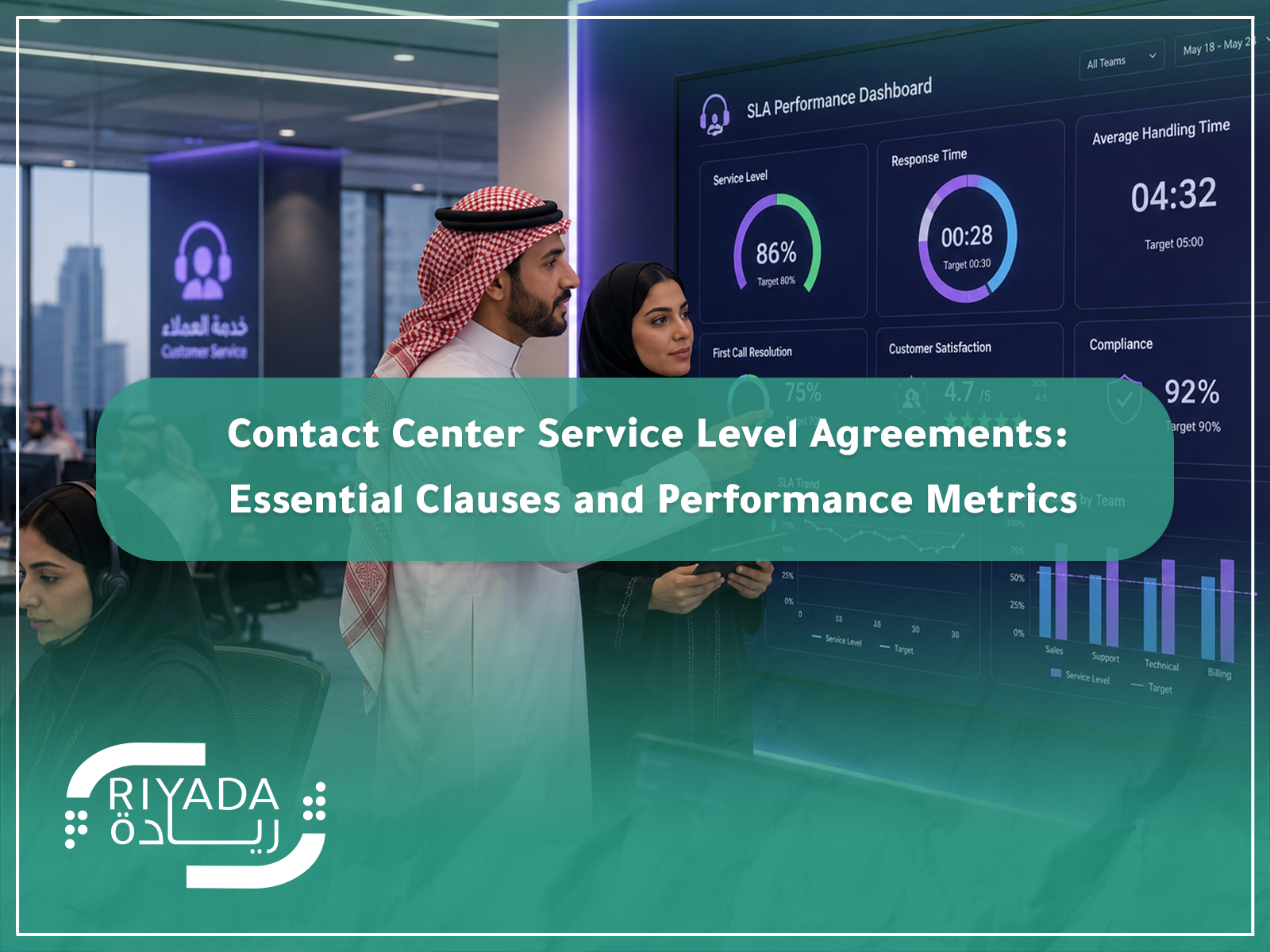
Contact Center Service Level Agreements: Essential Clauses and Performance Metrics
A Contact Center Service Level Agreement defines what customers can expect from a contact center provider, how performance will be measured, and what happens when agreed service levels are not achieved. It should therefore be treated as more than a contractual document; it is a practical framework for managing service quality and operational performance.
This guide covers the key clauses and metrics that should be considered, from service levels and response times to quality, customer satisfaction, corrective actions, and service credits.
What Is a Contact Center Service Level Agreement?
A Contact Center Service Level Agreement is an agreement that defines the level of service a contact center provider is expected to deliver during the contract period.
It typically explains the services covered, communication channels, operating hours, performance metrics, calculation methods, data sources, reporting requirements, and actions that may be taken when performance falls below agreed targets.
In outsourced contact center operations, a Contact Center Service Level Agreement turns broad expectations such as “excellent customer service” into measurable targets that both parties can monitor.

Why Are Contact Center SLAs Important?
When a company works with an external provider, disagreements can arise if service expectations are not defined in advance.
A customer may consider response times unacceptable, while the provider may believe performance is within normal limits. The two parties may also use different definitions or calculation methods for the same metric.
A clear Contact Center Service Level Agreement helps:
- Define expected service levels.
- Establish measurable performance targets.
- Standardize calculation methods.
- Clarify client and provider responsibilities.
- Monitor performance regularly.
- Establish corrective actions.
- Define service credits or contractual penalties when appropriate.
What Is the Difference Between an SLA and a KPI?
One of the most common sources of confusion when preparing a Contact Center Service Level Agreement is treating SLAs and KPIs as the same thing.
What Is an SLA?
An SLA is a contractual commitment that defines an agreed level of service between two parties.
For example, the parties may agree that a specific percentage of calls should be answered within a defined period.
What Is a KPI?
A KPI is a performance indicator used to measure a specific aspect of an operation.
Common contact center performance metrics include:
- Average Speed of Answer (ASA).
- Average Handle Time (AHT).
- First Contact Resolution (FCR).
- Call Abandonment Rate.
- Customer Satisfaction (CSAT).
- Quality scores.
In simple terms, a KPI tells you what you measure, while an SLA defines the level of performance that has been agreed upon and how it will be managed.
What Should a Contact Center SLA Cover?
Before defining targets, a Contact Center Service Level Agreement should clearly define the scope of service.
This may include:
- Inbound calls.
- Outbound calls.
- Email.
- Live chat.
- WhatsApp.
- Social media.
- Technical support.
- Customer service.
- Complaint handling.
- Order follow-up.
The agreement should also define operating hours, working days, and which channels are subject to each service level.
Should Every Channel Have the Same SLA?
Not necessarily.
The appropriate target for voice calls may be different from email or live chat because customer expectations and operational requirements vary by channel.
For this reason, a Contact Center Service Level Agreement should define channel-specific targets when appropriate rather than applying one standard to every interaction.
Defining the Service-Level Target
Service Level is one of the most important elements to consider when creating a Contact Center Service Level Agreement.
It generally measures the percentage of interactions answered or handled within a specified time.
For example, a company may establish a target for answering a defined percentage of calls within a specific number of seconds.
The target should be based on:
- Call volume.
- Average handling time.
- Staffing levels.
- Operating hours.
- Customer expectations.
- Service importance.
- Seasonal demand.
- Budget.
The goal is not simply to select the highest possible target. It is to establish a level that is realistic and aligned with business needs.
Average Speed of Answer (ASA)
Average Speed of Answer, or ASA, measures the average time customers wait before their calls are answered.
ASA is an important metric in a Contact Center Service Level Agreement because it has a direct impact on the customer experience.
Long waiting times can create frustration even when other contact center metrics appear strong.
How Is ASA Measured?
ASA is generally calculated using the average waiting time for answered calls, based on the definition and methodology agreed upon in the contract.
A Contact Center Service Level Agreement should clarify:
- What is included in the calculation.
- Which waiting time is measured.
- Whether any interactions are excluded.
- What system provides the data.
- What measurement period applies.
Average Handle Time (AHT)
Average Handle Time measures the average amount of time required to handle a customer interaction.
It may include:
- Talk time.
- Hold time.
- After-call work.
A Contact Center Service Level Agreement should define exactly how AHT is calculated because the methodology may vary between projects.
Does a Lower AHT Always Mean Better Performance?
No.
Pressuring agents to reduce call duration can sometimes result in unresolved customer issues.
AHT should therefore be considered alongside FCR, CSAT, and quality scores rather than treated as an isolated target.

First Contact Resolution (FCR)
First Contact Resolution measures how effectively a contact center resolves a customer’s issue during the first interaction without requiring additional follow-up.
FCR is one of the most valuable contact center performance metrics because it connects operational efficiency with customer experience.
How Should FCR Be Defined?
A Contact Center Service Level Agreement should clearly define what qualifies as a first-contact resolution.
For example, does an interaction count as resolved if the customer does not contact the company again within 24 hours, 48 hours, or seven days?
What happens when the issue requires another department?
These definitions matter because they directly affect reported performance.
Call Abandonment Rate
Call Abandonment Rate measures the percentage of callers who disconnect before reaching an agent.
A high abandonment rate may indicate:
- Long waiting times.
- Insufficient staffing.
- Unexpected increases in call volume.
- Routing problems.
- Poor peak-period planning.
However, the calculation should define which calls are included because some calls may be disconnected after only a few seconds or for reasons unrelated to provider performance.
A Contact Center Service Level Agreement should therefore specify the calculation method and applicable exclusions.
Call Quality and Agent Performance
Speed alone does not determine customer service quality.
A contact center may achieve excellent response times while still providing inaccurate information or poor customer interactions.
A strong Contact Center Service Level Agreement should therefore include measurable quality standards.
Quality criteria may include:
- Information accuracy.
- Process compliance.
- Communication skills.
- Understanding customer needs.
- Problem resolution.
- Interaction documentation.
- Policy compliance.
- Customer data protection.
The evaluation process should be transparent and understood by both parties.
Customer Satisfaction (CSAT)
Customer Satisfaction, or CSAT, helps organizations understand how customers perceive the service they received.
It can be measured through a short survey after an interaction.
When CSAT is included in a Contact Center Service Level Agreement, the agreement should define:
- How feedback is collected.
- Sample size or survey volume.
- Calculation method.
- Covered channels.
- Target score.
- Treatment of invalid responses.
CSAT becomes more useful when reviewed alongside quality and operational metrics.
Defining Data Sources and Calculation Methods
One of the most important parts of a Contact Center Service Level Agreement is defining where performance data comes from.
Potential sources include:
- Contact center platforms.
- CRM systems.
- Ticketing systems.
- Chat platforms.
- Reporting tools.
The calculation method should also be clearly documented.
If the agreement states that a certain percentage of calls must be answered within a defined time, both parties should know exactly how that percentage is calculated and which interactions are excluded.
Managing Exceptions and Peak Seasons
Contact center demand rarely remains constant throughout the year.
Businesses may experience significant increases during:
- Marketing campaigns.
- Product launches.
- Seasonal periods.
- Promotions.
- Ramadan.
- Holidays.
- Service disruptions or emergencies.
A Contact Center Service Level Agreement should explain how performance will be handled during these periods.
Should SLA Targets Change During Peak Periods?
They can, if both parties agree to specific rules in advance.
The agreement may define:
- What qualifies as a peak period.
- The threshold that triggers an exception.
- Which metrics are affected.
- How long the exception applies.
- Notification requirements.
- Each party’s responsibilities.
This prevents vague references to “exceptional circumstances” from becoming a reason for unexplained performance declines.
Reporting and Performance Reviews
Signing a Contact Center Service Level Agreement is not enough. Performance must be monitored continuously.
The agreement should define reporting requirements, which may include:
- Contact volume.
- Service Level.
- ASA.
- AHT.
- FCR.
- Abandonment Rate.
- CSAT.
- Quality Score.
- Complaints.
- SLA breaches.
- Corrective actions.
Governance and Review Meetings
Regular meetings between the client and provider allow both parties to review results, understand performance gaps, and agree on improvement actions.
Depending on the project, reviews may take place weekly, monthly, or quarterly.
Corrective Action Plans
What happens when a provider misses an agreed target?
The answer should not simply be “appropriate action will be taken.”
A Contact Center Service Level Agreement should establish a clear process:
- Identify the missed metric.
- Analyze the root cause.
- Submit a corrective action plan.
- Assign responsibilities.
- Set an improvement deadline.
- Monitor results.
- Escalate if the issue continues.
This makes the SLA a performance improvement tool rather than simply a mechanism for applying penalties.
Service Credits and Contractual Penalties
A Contact Center Service Level Agreement may include service credits or contractual penalties when agreed service levels are not achieved.
These provisions should be carefully defined.
The agreement should explain:
- Which metrics trigger service credits.
- The threshold for eligibility.
- How the credit is calculated.
- Any maximum credit limit.
- Applicable exclusions.
- What happens when the issue continues.
A temporary and minor performance decline should not necessarily be treated in the same way as a persistent issue that materially affects customers.
Client and Provider Responsibilities
SLA performance is not solely the responsibility of the service provider.
The client may need to provide:
- Required systems.
- Product and service information.
- Knowledge base content.
- Pricing and policy updates.
- System access.
- Product training.
- Required approvals.
The provider may be responsible for:
- Recruitment.
- Training.
- Supervision.
- Quality management.
- Daily operations.
- Reporting.
- Workforce management.
- Business continuity.
Clearly defining these responsibilities is a critical part of a Contact Center Service Level Agreement.
Common SLA Drafting Mistakes
Using Too Many Metrics
The objective is not to create dozens of KPIs. Focus on the metrics that genuinely reflect customer experience and operational performance.
Setting Unrealistic Targets
Aggressive targets without considering volume, staffing, technology, and operating conditions can create unnecessary disputes.
Failing to Define Metrics
Simply mentioning ASA or FCR without explaining how each metric is calculated can lead to disagreements.
Ignoring Exceptions
Peak seasons, system outages, and exceptional events should be addressed before they occur.
Focusing Only on Speed
Fast service is not necessarily good service. Speed should be balanced with quality, resolution, and customer satisfaction.
Failing to Define Data Sources
Both parties should agree on the systems and data that will be used to determine performance.
Sample Contact Center SLA Structure
A basic Contact Center Service Level Agreement can include the following sections:
Clause | What to Define |
| Service Scope | Covered services and channels |
| Operating Hours | Working days and hours |
| Service Level | Target percentage and response time |
| ASA | Calculation method and target |
| AHT | Components and calculation method |
| FCR | Definition of first-contact resolution |
| Abandonment Rate | Target and exclusions |
| CSAT | Measurement method and target |
| Quality Score | Quality evaluation criteria |
| Reporting | Report content and frequency |
| Exceptions | Peak periods and special circumstances |
| Corrective Actions | Required actions and deadlines |
| Service Credits | Eligibility and calculation |
| Governance | Performance review schedule |
This sample should be adapted to the specific requirements, services, and operating model of each project.
How Can You Make Your SLA More Effective?
An effective Contact Center Service Level Agreement should be clear, measurable, realistic, and practical.
Start by identifying what matters most to customers and the business, then connect those outcomes to operational metrics that the provider can actually influence.
The agreement should also be reviewed periodically because customer expectations, contact volumes, and communication channels can change.
Connect KPIs to Business Objectives
Do not treat every KPI as an isolated target. Ask how each metric affects customer experience, operating costs, efficiency, or revenue.
Review the Reasons Behind the Numbers
If FCR declines, do not simply record the result. Determine whether the cause is training, system limitations, process complexity, or another operational issue.
Make Expectations Mutual
A Contact Center Service Level Agreement should include client responsibilities as well as provider responsibilities so that both parties understand what they need to deliver.
Frequently Asked Questions
What are the most important contact center SLA metrics?
Common metrics include Service Level, ASA, AHT, FCR, Call Abandonment Rate, CSAT, and quality scores. The right combination depends on the nature of the service.
Are SLA and KPI the same thing?
No. A KPI measures a specific aspect of performance, while an SLA defines an agreed service level and establishes how performance will be measured and managed.
What is the difference between ASA and AHT?
ASA measures the average time a customer waits before an agent answers. AHT measures the average time required to handle the customer interaction.
Should an SLA include penalties?
It can include service credits or contractual penalties, but these should be clearly defined and connected to specific metrics and measurable breaches.
Can SLA targets differ by channel?
Yes. Voice, email, chat, WhatsApp, and social media may require different targets based on customer expectations and operational requirements.
How should peak seasons be handled?
Peak periods, exclusions, and special operating conditions should be defined in advance rather than negotiated after performance has already declined.
Should a Contact Center Service Level Agreement be reviewed regularly?
Yes. Regular reviews help ensure that targets continue to reflect business volumes, customer expectations, and the project’s current operating model.
Turn Your SLA Into a Performance Management Tool
A Contact Center Service Level Agreement should do more than define numbers and penalties. Its real purpose is to create a shared framework that allows the client and provider to work toward the same expectations, measure performance fairly, and continuously improve the customer experience.
By defining Service Level, ASA, AHT, FCR, quality, customer satisfaction, data sources, exceptions, and corrective actions, businesses can create a clearer and more accountable approach to contact center performance.
If you are looking for a partner to operate or outsource your contact center services, Riyada can help design and deliver an operating model aligned with your business objectives and service requirements.
